

Keynotes
Title: Data-Driven ROADS (Resilient Operation of Active Distribution Systems)
Abstract
In the absence of real-time visibility and adequate control, the increasing proliferation of distributed energy resources can play havoc with the distribution system, particularly, its voltage. This talk will describe how system-wide information obtained from a select few real-time sensors using machine learning can be used to optimize reactive power regulation for achieving coordinated, robust, and fast voltage control of active distribution systems. To ensure trust in the machine learning-based approach, formal guarantees of performance will also be established. The talk will conclude by demonstrating additional system-wide benefits that an integrated data-driven approach towards monitoring and control provides to power utilities responsible for operating large, complex distribution systems in a reliable and resilient manner.
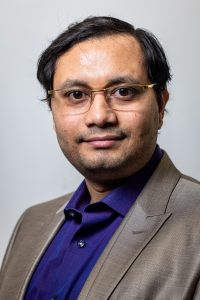
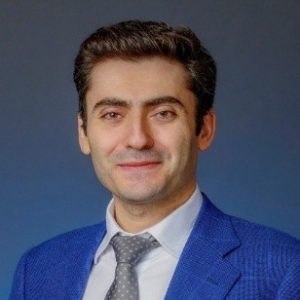
Title: AI-Enabled Resilience and Cybersecurity for Active Distribution Grids
Bio:
Mohammad B. Shadmand earned his Ph.D. in Electrical Engineering from Texas A&M University, College Station, USA, in 2015.
Dr. Shadmand is currently an Associate Professor in the Department of Electrical & Computer Engineering at University of Illinois Chicago, USA. He also serves as the Director of the Intelligent Power Electronics at Grid Edge (IPEG) Research Laboratory. His current research interests include resilient control of power electronics dominated grids, resilient self-driving grid, collaborative control architecture for network of grid-following and grid-forming inverters, AI and cybersecurity, applications of AI techniques for inverters dominated power systems, situational awareness and intrusion detection systems for power electronics and smart grid. He has published more than 200 journal and conference papers, three book chapters, and has delivered several invited talks and webinars.
Dr. Shadmand has received several prestigious awards, including the 2024 IEEE J. David Irwin Early Career Award for outstanding contributions to the resilience and cybersecurity of power electronics dominated grids. Other prestigious awards and recognition of Dr. Shadmand includes best teaching award from University of Illinois Chicago in 2025, Michelle Munson Serban Simu Keystone Research Scholar Award from Kansas State University in 2017 and the 2019 IEEE Myron Zucker Faculty-Student Research Grant and Award. He has been honored with 4 best paper awards at different IEEE conferences.
In 2022, he has served as Guest Editor for special section on artificial intelligence & machine learning applications in smart inverters of IEEE Journal of Emerging and Selected Topics in Industrial Electronics. In 2018, he has served as Guest Editor for special issue on Challenges in Future Grid-Interactive Power Converters: Control Strategies, Optimal Operation, and Corrective Actions in IET Renewable Power Generation. He has served as Associate Editor of IEEE TRANSACTIONS on INDUSTRY APPLICATION. Currently, he is an Associate Editor for the IEEE TRANSACTIONS ON INDUSTRIAL ELECTRONICS and IEEE JESTIE. He is serving as Chair of IEEE IES Technical Committee on Smart Grid. He is currently serving as Technical Program Co-Chair of 52nd IEEE IECON 2026 in Qatar, General Chair of 54th IEEE IECON 2028 in Los Angeles, USA, and Technical Program Co-Chair of IEEE ECCE 2027 in Providence, USA. He has served as the General Chair of 50th IEEE IECON 2024, Chicago, USA. He served as the Technical Program Co-Chairs of many conferences including the 19th IEEE CPE-POWERENG 2025, Turkey and the 2025 IEEE ISIE, Canada, IEEE SGRE, Qatar in 2019, 2022, and 2024.
Abstract
Maintaining frequency and voltage regulation while ensuring stability in active distribution grids dominated by power electronics presents significant challenges, primarily due to their heterogeneous structures and low-inertia characteristics. These inverter-based systems, while enabling renewable integration, also introduce new cyber-physical vulnerabilities that threaten synchronization, stability, and coordinated operation across grid-forming and grid-following inverters. This talk explores how artificial intelligence can transform vulnerability into resilience by empowering next-generation, self-driving grid architectures. The discussion will examine the impact of cyberattacks on inverter-dominated systems employing hierarchical control strategies, highlighting how compromised synchronization can cascade into instability. Building upon this, data-driven and learning-based solutions will be presented to harness the adaptive intelligence of both grid-forming and grid-following inverters, enhancing their ability to withstand disturbances, anomalies, and malicious intrusions. The talk concludes with a forward-looking research roadmap toward AI-enabled inverters and resilient, cybersecure active distribution grids, marking a critical step toward realizing self-driving, intelligent power networks.
